

🏷️ Tips · 📅 September 30, 2026 · ⏱ 9 min read
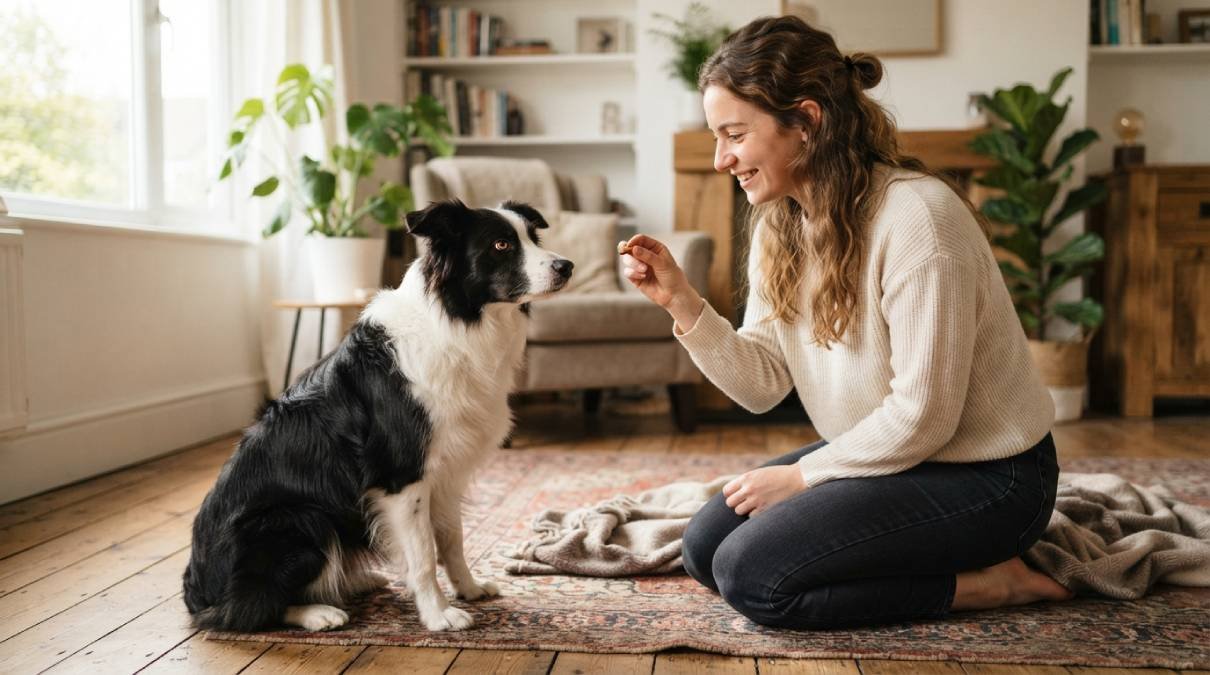
You're not training a dog to obey. You're teaching a new friend how your world works.
The most effective dog training tips are simple: use positive reinforcement, keep sessions short (about 5 to 10 minutes), reward with something your dog truly loves, stay consistent with your cue words, and build up distractions gradually. And the best place to begin is teaching your dog its name, because a dog who reliably looks at you when called is ready to learn everything else.
This guide walks you through 10 practical tips, a step-by-step name game, the basic cues every dog should know, the mistakes that slow training down, and when it's time to bring in a professional. It also includes a few ideas for names that are easy for dogs to learn, which matters more than most owners realize.
⚡ Quick answer
1. Teach the name first. 2. Reward what you like, using treats, praise or play. 3. Keep sessions to 5–10 minutes and end on a win. 4. Use the same cue words every time. 5. Add distractions slowly.
🐕 Why Training Starts With Your Dog's Name
A dog can't follow a cue it isn't listening for. The name is the "I'm talking to you" signal that gets your dog's attention before you ask for a sit, a down or a recall. When it reliably means "look at me, good things are coming," every other cue gets easier to teach.
That's also why the choice of name matters. Short, crisp names are easy for a dog to pick out from everyday chatter, and names that sound like your cue words can cause confusion. More on that in the naming section below. If you're curious how quickly pets catch on, see our article on how long it takes a pet to learn its name.
✅ 10 Dog Training Tips That Actually Work
These tips work for puppies and adult dogs alike. Start with the first three and build from there.
1. Choose a name that's easy to train
Start hereAim for one or two syllables that end on a clear sound. Also check that the name doesn't sound like a cue you'll use often, like a name that rhymes with "sit" or "no." If your dog already has a name that's a bit long, a short nickname used in training works just as well.
2. Play the name game
Follow these steps in a quiet room with a few small treats ready:
a. Say your dog's name once, in a bright, happy voice.
b. The moment your dog looks at you, say "yes!" and hand over a treat.
c. Repeat five to ten times, then end the session while your dog is still keen.
d. Over the next days, try it at greater distances and in other rooms, then outside.
3. Use positive reinforcement
Positive reinforcement means rewarding the behavior you want so your dog repeats it. The American Kennel Club describes successful training as built on consistent principles rather than quick fixes, with rewards at the center. Catch your dog doing something right and pay for it, and they'll keep offering it.
4. Add a marker word or clicker
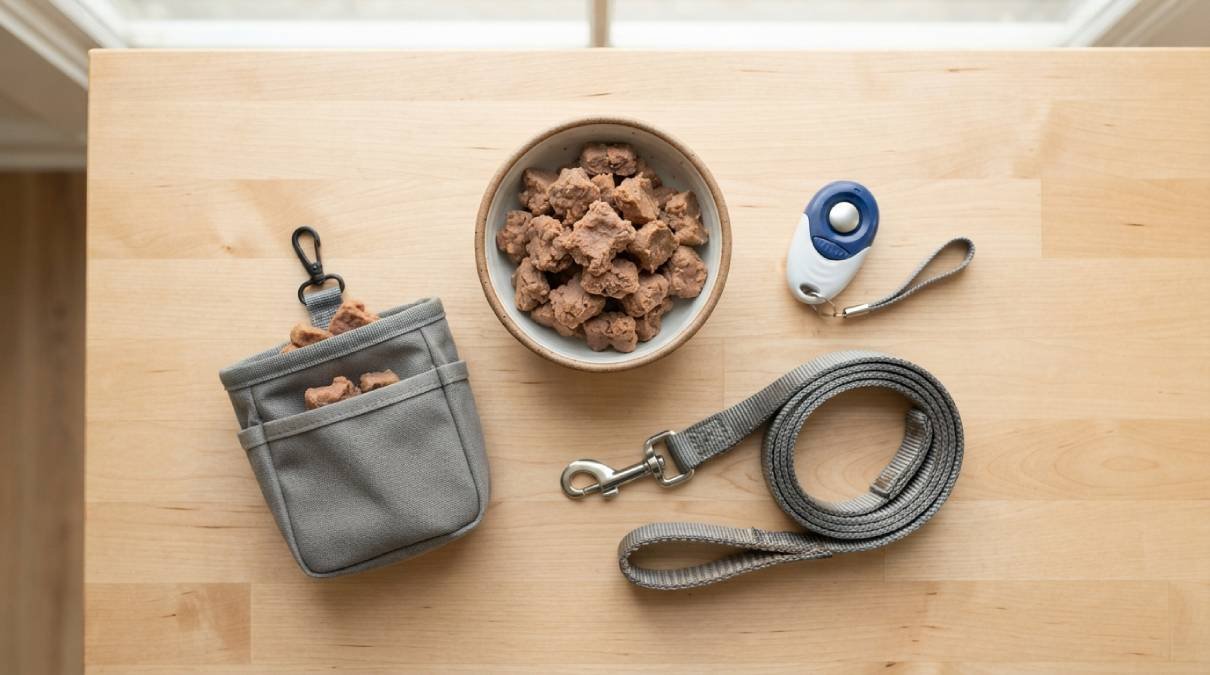
A marker is a short, consistent signal, like a click or the word "yes," that tells your dog the exact instant they did the right thing. Say it the moment the behavior happens, then deliver the reward. Dogs learn much faster when the timing is precise.
5. Keep sessions short
Brief sessions keep your dog focused. The AKC recommends five to ten minutes for puppies, always ending on a positive note. PetMD suggests about five minutes per session and no more than 15 minutes a day in total for young puppies. Two or three mini sessions beat one long one.
6. Pay with rewards your dog really loves
A reward only works if your dog finds it rewarding. Anything your dog loves counts, whether that's a soft treat, a favorite toy, praise or a quick game of tug. Use higher-value rewards when the task gets harder or the environment gets busier, and keep treats tiny so training doesn't turn into extra meals.
7. Be consistent with cue words and rules
Choose one word for each behavior and have everyone in the household use it. If one person says "down" for lying down and another uses it for "get off the couch," your dog is going to be confused. Agree on the house rules, too, so the answer to "can I jump on the sofa?" is the same every day.
8. Add distractions gradually
A cue that works perfectly in your living room may fall apart at the park, and that's normal. PetMD points out that training in a new place like a park or the beach is very different from training at home. Move from quiet room to backyard to street, and raise the reward value as the environment gets busier.
9. Make coming when called always worth it
Recall is one of the most common training challenges, and the AKC stresses that dogs come more reliably when being called consistently leads to good things. Never call your dog to scold them or end the fun, and reward every recall, even if it took a while to arrive.
10. End on a win and keep practicing
If your dog is struggling, go back to something they already know, reward it generously and stop there. Puppies can learn the basics quickly, but reliability develops with consistent practice and maturity, so keep training after the first few weeks. Dogs of any age can learn, and an older dog can master all of this too.
🎓 The Basic Cues Every Dog Should Know
Teach these in order, one at a time, using treats and a marker word.
Name
Say it once; reward the instant your dog looks at you.
Sit
Hold a treat above the nose and move it back over the head. Never push the rear down.
Come
Say it cheerfully from a short distance and reward on arrival.
Down
From a sit, lower a treat to the floor between the front paws.
Stay
Start with one second and add time, then distance, very slowly.
Leave it
Reward your dog for looking away from a treat in your closed hand.
🚫 Common Training Mistakes to Avoid
The biggest one is using your dog's name to scold them. If "Max!" is followed by an angry voice, the name starts to mean trouble, and your dog may stop looking at you. Save the name for happy moments and use a separate "no" or redirect when you need to correct.
Repeating a cue over and over is another trap, because it teaches your dog that the first request doesn't matter. Say it once, wait a few seconds, and help your dog succeed. Boring rewards, sessions that run too long and training when your dog is tired or overexcited all slow progress too. If your dog seems "stubborn," the AKC suggests checking the speed of your training and the value of your rewards first.
Finally, don't expect perfection overnight. Consistent, short sessions over weeks get far better results than occasional marathon ones. If you're also working on handling skills, our guide to dog grooming tips at home shows how to turn brushing and nail trims into training opportunities.
📣 Names That Are Easy for Dogs to Learn
If you're still deciding on a name, short and crisp is the way to go. Names like Max, Milo, Finn, Leo, Luna and Bella are quick to say, easy to pitch in a happy voice and hard to mistake for anything else. Two-syllable names that end in an "ee" sound, like Sunny, Ruby and Daisy, carry well across a park.
Double-check any name against your cue words. Pit rhymes with "sit," and Beau can sound a lot like "no," so you'd need to be careful with those. A quick test is to say the name and your main cues out loud in the same sentence and see whether they blur together.
Try it yourself: in the Pet Name Generator, choose Dog and the Friendly trait for popular short names like Max, Milo and Luna, or pick the Smart trait for quick-learner names like Link, Nova and Pixel.
🩺 When to Get Professional Help
Consider a trainer or your vet if you notice any of the following:
Sudden changes in behavior, aggression, extreme fear or anxiety, or a dog who doesn't seem to make progress despite consistent effort. Start with a vet check to rule out pain or illness, then look for a qualified trainer who uses positive reinforcement methods and can tailor the plan to your dog, as the AKC advises.
❓ Frequently Asked Questions
What is the best way to teach a dog its name?
Say the name once in a cheerful voice, and the moment your dog looks at you, mark it with a word like "yes" and give a treat. Repeat in short sessions, then gradually add distance and distractions. Never use the name to scold your dog.
How long does it take a dog to learn its name?
Many dogs begin responding within a few days of short, consistent sessions, but the timing varies with age, background and distractions. Reliability in busy places usually takes longer, so keep practicing and rewarding.
How long should a dog training session be?
Keep sessions to about 5 to 10 minutes, especially for puppies, and end on a positive note. Young puppies do best with roughly five-minute sessions and no more than about 15 minutes of training in total per day.
At what age should I start training my dog?
You can start as soon as you bring a puppy home, typically around 8 weeks old, with short, positive sessions. Adult and senior dogs can learn too, since positive reinforcement works at any age.
Do I need treats to train my dog?
Not always. A reward can be anything your dog loves, including praise, petting, a favorite toy or play. Treats are handy because they're quick and easy to deliver, but use whatever motivates your dog most.
Should I use my dog's name when I correct them?
No. If the name is often followed by a scolding, your dog may learn to avoid it. Keep the name for positive moments and use a different word or calmly redirect your dog when you need to interrupt a behavior.
Find a Name Your Dog Will Love Answering To
Choose Dog, pick a trait like Friendly or Smart, and get name ideas in seconds.
Open Pet Name Generator