
“There is a reason the world has fallen in love with Doodles. They don’t just look like living teddy bears; they have the soulful eyes and gentle hearts to match.”

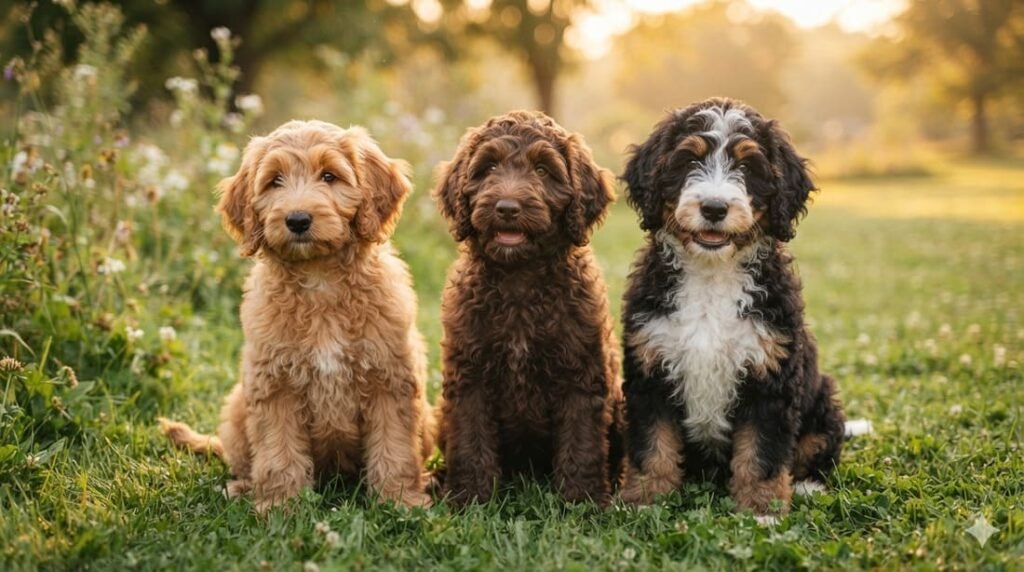
Over the past decade, we have witnessed an absolute explosion in the popularity of Poodle mixes. From bounding, joyful Goldendoodles and loyal Bernedoodles to pocket-sized, affectionate Cavapoos, these curly-haired companions have entirely taken over our neighborhoods, dog parks, and social media feeds. They are cherished for their incredible intelligence, family-friendly temperaments, and of course, those famous low-shedding, hyper-fluffy coats that make them look like literal stuffed animals brought to life.
But with this surge in popularity comes a very real, very modern dilemma: what on earth do you name a dog that looks this outrageously cute? You can’t just slap a generic name on a creature with this much personality and aesthetic appeal. The naming pressure is palpable. You want a name that captures their bouncy energy, highlights their gorgeous coat, and reflects their status as a beloved family member.
Welcome to The Doodle Dictionary. We have meticulously curated this comprehensive guide to help you navigate the delightful challenge of finding the absolute perfect moniker.
Whether you are searching for premium Goldendoodle names, sweet Cavapoo names, or downright cute names for doodle mixes of any variety, you will find your inspiration right here.
If you visit any local dog park today and call out the name Oliver, Charlie, Mabel, Arthur, or Winston, there is an incredibly high statistical probability that a fluffy Doodle will come bounding toward you.
Have you ever stopped to wonder why human names for dogs—specifically "toddler names" or vintage "grandpa/grandma names"—have become the absolute gold standard for these particular breeds?
Behavioral scientists and canine experts point to the phenomenon of anthropomorphism, heavily triggered by the specific physical traits of Poodle mixes. Doodles possess what scientists refer to as "baby schema" (or kindchenschema).
They have large, highly expressive eyes often framed by "eyebrows" and "beards" made of fur, round faces, and soft, tactile coats that mimic human hair far more than traditional dog fur. Because their facial structures allow for expressions that closely mirror human emotions—curiosity, confusion, joy, and empathy—our brains instinctively categorize them closer to human children than wild canines.
As a result, naming a Bernedoodle "Killer" or "Fang" feels completely cognitively dissonant. Instead, we gravitate toward dignified, endearing human names that validate their status as integral, equal members of the family unit.
A Cavapoo named Arthur isn't just a pet; he's a distinguished little gentleman who sits on the sofa and watches television with you. A Goldendoodle named Mabel isn't just an animal; she's a sweet, curly-haired companion who loves morning cuddles.